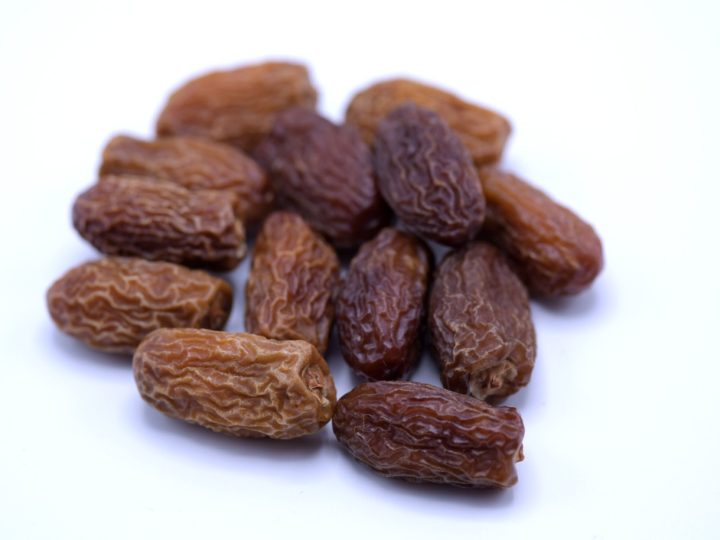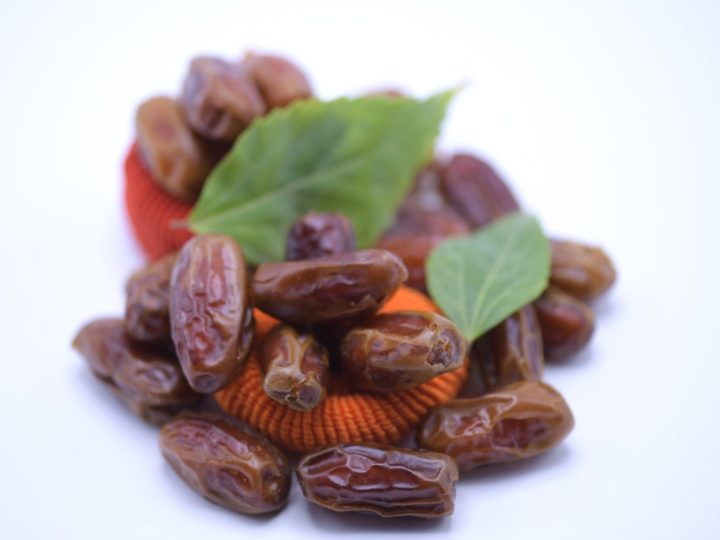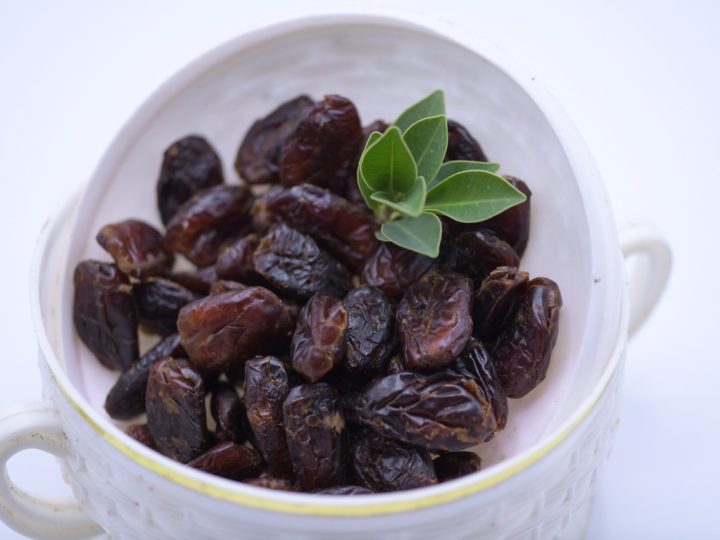
Scan the ingredient lists of energy balls, snack bars, granolas and “no added sugar” treats and one ingredient keeps appearing: dates. The clean-label movement turned this ancient fruit into one of the food industry’s favourite sweeteners. Here’s how the three industrial formats compare.
Date paste — the binder
Pitted dates pressed into a smooth, dense paste. It sweetens, binds and adds moisture in one step — the backbone of energy balls, bar cores, fillings and bakery. Supplied in vacuum blocks sized for production lines. Spec conversation: firmness, moisture and whether you need it chilled.
Date powder — the sugar replacer
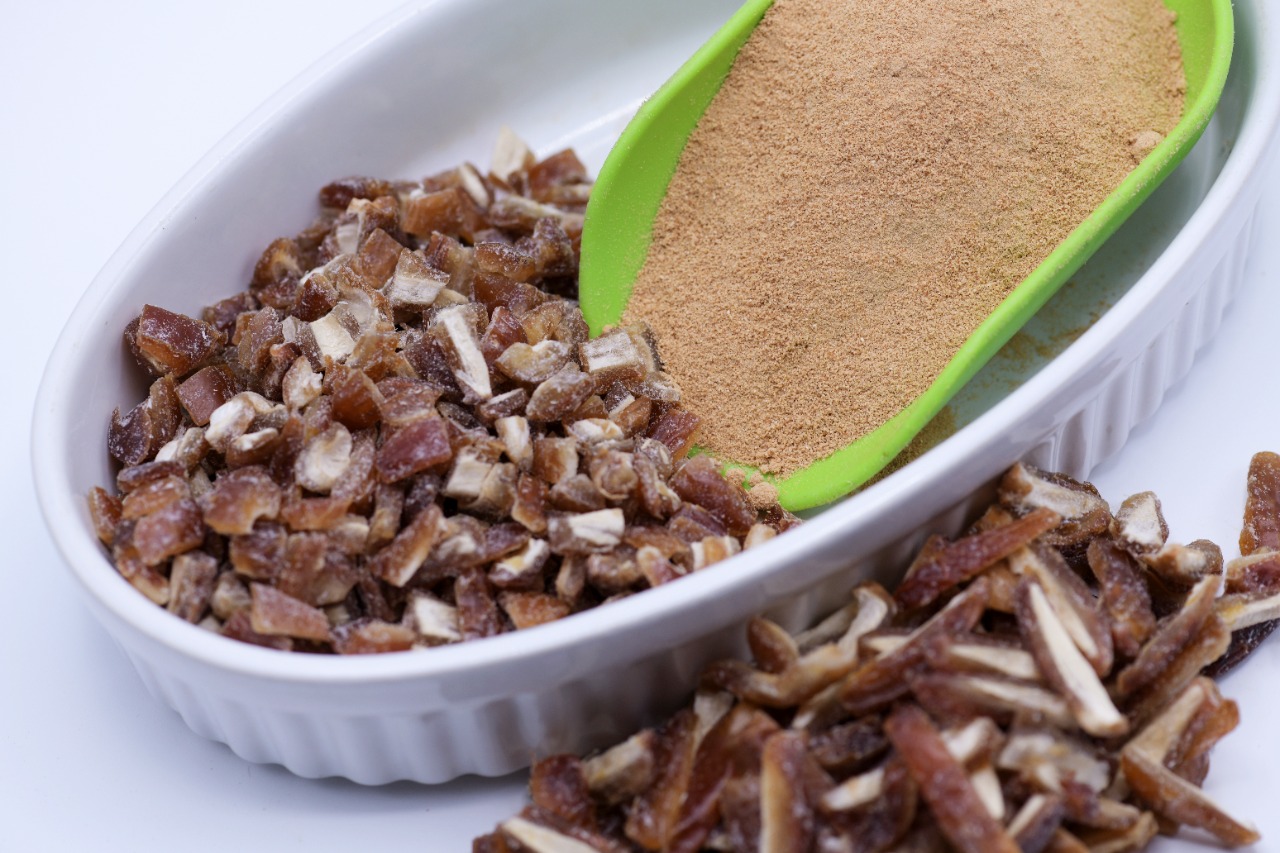
Whole dried dates, milled fine. Swaps into recipes roughly like brown sugar but brings fibre and minerals along, and lists on the label as just “dates.” Used in bakery mixes, beverages, smoothie blends and dustings. Spec conversation: mesh size and flow (anti-caking approach).
Diced dates — the visible fruit
Uniform cubes, optionally dusted with rice flour to stay free-flowing. They survive mixing and baking intact, giving cereals, cookies and breads visible fruit pieces. Spec conversation: cut size, dusting percentage and target moisture.
Why origin matters
Industrial buyers sometimes treat date ingredients as commodities — until a batch varies and a production run suffers. Consistency comes from controlling the fruit: one variety, one farm, one processing line. Because we grow the Aseel that feeds our own powder, paste and diced production, batch-to-batch drift stays low.
Developing a product? Tell us your spec — we’ll send samples and a straight answer on what’s achievable.